The booth you buy first shapes your first year of business more than almost any other decision. It determines what clients you can target, what events you can work, how fast you can set up solo, and what you can realistically charge. iPad, DSLR, and mirror booths aren’t just different price points — they’re different businesses with different markets, different skill requirements, and different income ceilings.
This guide gives you an honest breakdown of all three so you can make the right call before spending a dollar — and avoid the expensive mistake of buying the wrong setup for your situation.
In This Guide
- The Three Booth Types at a Glance
- iPad Photo Booth — Full Breakdown
- DSLR / Windows Booth — Full Breakdown
- Mirror Booth — Full Breakdown
- Side-by-Side Comparison Matrix
- Which Should YOU Buy First?
The Three Booth Types at a Glance
Before going deep on each, here’s the quick-reference overview that answers the most common first-buyer questions at a glance.
| Factor | 📱 iPad Booth | 📷 DSLR Booth | 🪞 Mirror Booth |
|---|---|---|---|
| Starting Investment | $2,500–$5,000 | $4,000–$8,000 | $5,000–$12,000 |
| Solo Setup Time | 15–25 min | 30–60 min | 30–45 min |
| Image Quality | Good | Exceptional | Exceptional |
| Vehicle Required | Sedan or SUV | SUV or van | SUV or van |
| Technical Skill Needed | Low | Intermediate–High | Low–Intermediate |
| Best Market Fit | Weddings, private events, drop-off | Corporate, branded activations | Luxury weddings, corporate galas |
| Typical Event Rate | $600–$1,300 | $900–$2,000 | $1,000–$2,500 |
| Best For | First-time operators | Tech-savvy operators | Premium market focus |
iPad Photo Booth — Full Breakdown
iPad Photo Booth
The industry’s highest-volume entry point for new operators
Best for Beginners
Est. Income Potential: $4,000–$10,000/mo
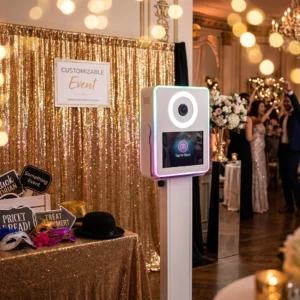
An iPad-based photo booth uses an iPad Pro mounted in a commercial-grade enclosure, running dedicated software (Darkroom, Snappic) that manages countdown, capture, template overlay, and instant digital delivery. The enclosure provides stability, professional aesthetics, integrated lighting mounts, and cable management — transforming a consumer tablet into a commercial tool. This is the most popular setup in the industry for good reason: the barrier to entry is the lowest, the operational complexity is the most manageable, and the market demand is the deepest.
| SETUP TIME | VEHICLE | INVESTMENT | SOFTWARE | IMAGE QUALITY |
| 15–25 min solo | Sedan or compact SUV | $2,500–$5,000 | Darkroom, Snappic | Good (tablet camera) |
| Strengths | Limitations |
| Lowest startup cost in the category | Image quality capped by iPad camera hardware |
| Fastest solo setup — 15–25 minutes, no tools | Lower pricing ceiling than DSLR or mirror booths |
| Fits in a sedan — no van or SUV required | More competitive market — many iPad booth operators |
| Beginner-friendly software with touchscreen UI | Limited green screen capability compared to DSLR |
| Ideal for drop-off model — portable and self-explanatory | |
| Widest market demand — weddings, parties, corporate |
Choose the iPad Booth If…
You want to launch quickly with the lowest upfront investment, you’re targeting weddings and private events, you plan to run a drop-off model (now or eventually), you’re working from a sedan or compact SUV, or you’re completely new to photo booth operations and want the lowest learning curve possible.
DSLR / Windows Booth — Full Breakdown
DSLR / Windows Photo Booth
Professional image quality for operators ready to go deeper
Best Image Quality
Est. Income Potential: $6,000–$18,000/mo
A DSLR booth uses a full-frame or crop-sensor mirrorless camera (Canon EOS, Sony Alpha) tethered via USB to a Windows laptop running dedicated software (DSLR Booth, Breeze Systems, Darkroom for Mac). The camera fires with an external flash or strobe system, producing images with a sharpness, depth of field, and low-light performance that a tablet simply cannot match. DSLR setups require more technical setup knowledge but unlock a meaningfully higher pricing tier — particularly in the corporate and branded activation market where image quality is a brand compliance issue.
| SETUP TIME | VEHICLE | INVESTMENT | SOFTWARE | IMAGE QUALITY |
| 30–60 min | SUV or van | $4,000–$8,000 | DSLR Booth, Breeze, Darkroom | Exceptional (DSLR camera) |
| Strengths | Limitations |
| Best image quality of any booth type — full print-magazine level | Steeper learning curve — camera settings, flash, tethering |
| Unlocks the highest corporate and branded activation rates | Higher startup cost and more components to manage |
| Green screen capability — custom digital backgrounds | Windows-only software for most platforms — Mac operators limited |
| DSLR Booth and Breeze offer one-time license (no subscription) | Not suitable for drop-off — too complex for unattended use |
| Flash sync eliminates motion blur from excited, moving guests | Requires larger vehicle for full rig transportation |
Choose the DSLR Booth If…
You have a photography or technical background and are comfortable with camera settings and flash systems, you’re actively targeting corporate clients and brand activations from the start, you want to differentiate on image quality in a market with many iPad booth operators, or you’re an experienced operator adding a premium tier to an existing iPad business.
Mirror Booth — Full Breakdown
Mirror Photo Booth
The premium market’s statement piece — as much design object as photo tool
Premium Market
Est. Income Potential: $8,000–$20,000/mo
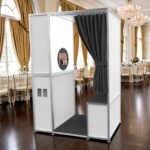
A mirror booth houses a camera, touchscreen display, and lighting inside an elegant full-length mirror enclosure — typically 55″–65″ tall. Guests interact with the mirror via touchscreen prompts, see their full-body reflection, and receive their photo via the same digital delivery methods as other booth types. The enclosure itself is the differentiator: when a mirror booth is set up at a venue, guests know immediately they’re getting a premium experience. This visual impact is why mirror booths command the highest per-event rates in the wedding market and are a natural fit for luxury corporate events and galas.
| SETUP TIME | VEHICLE | INVESTMENT | SOFTWARE | IMAGE QUALITY |
| 30–45 min | Full SUV or van | $5,000–$12,000 | Mirror-specific or DSLR Booth | Excellent (DSLR or iPad Pro) |
| Strengths | Limitations |
| Highest visual impact of any booth type — commands attention immediately | Heaviest and largest of the three types — requires full SUV or van |
| Highest per-event rates in the wedding market — luxury positioning | Highest startup cost — significant capital commitment for a first booth |
| Touchscreen interface is intuitive — relatively low technical learning curve | Venue accessibility limitations — stairs, narrow doors, small spaces are challenges |
| Full-length capture — more flattering than head-and-shoulders iPad framing | Not suitable for drop-off — size and weight make unattended delivery impractical |
| Strong differentiation in most markets — fewer mirror booth operators | Narrower market than iPad — not every event client is willing to pay the premium |
Choose the Mirror Booth If…
You’re specifically targeting the luxury wedding and black-tie corporate market, you have an SUV or van for transport, you want to be a premium-positioned operator with fewer but higher-value bookings, you’re an existing iPad booth operator looking to add a second unit that differentiates clearly from your first, or your local market has limited mirror booth competition and strong demand.
Side-by-Side Comparison Matrix
The complete head-to-head across every criterion a first-time buyer should consider before committing to a booth type.
| Criterion | iPad | DSLR | Mirror |
|---|---|---|---|
| Starting Investment | $2,500–$5,000 | $4,000–$8,000 | $5,000–$12,000 |
| Solo Setup Time | 15–25 min | 30–60 min | 30–45 min |
| Image Quality | Good | Exceptional | Excellent |
| Technical Skill Required | Low | Intermediate–High | Low–Intermediate |
| Vehicle Requirement | Sedan or SUV | SUV or van | Full SUV or van |
| Drop-Off Model Compatible | ✔ Yes | ✘ No | ✘ No |
| Green Screen Support | Limited | ✔ Full | Depends on software |
| Wedding Market Fit | ✔ Strong | ✔ Strong | ✔✔ Strongest |
| Corporate Market Fit | ✔ Good | ✔✔ Best | ✔ Strong |
| Typical Event Rate | $600–$1,300 | $900–$2,000 | $1,000–$2,500 |
| Income Ceiling (Solo) | ~$10,000/mo | ~$14,000/mo | ~$18,000+/mo |
| Market Competition | High | Moderate | Low–Moderate |
| Best First Booth | ✔ Most operators | ✔ Tech-savvy | ✔ Premium focus |
Which Should YOU Buy First? The Decision Framework
Overall scores and feature lists matter less than fit. Work through these five questions — your answers will point clearly to one booth type.
What’s your realistic starting budget?
Under $4,000→iPad booth — the only type that delivers a professional, commercial-grade setup at this budget
$4,000–$7,000→iPad booth (premium enclosure + printer) or entry-level DSLR setup if you have a technical background
$7,000–$12,000+→All three are viable — your market and goals determine the choice
What vehicle do you have for transport?
Sedan or compact crossover→iPad booth — specifically designed to fit in a sedan with room for a printer
Full-size SUV or minivan→Any booth type fits — your choice is guided by market and goals
Van or cargo vehicle→All three fit comfortably, including multiple units — ideal for scaling
What’s your primary target market?
Weddings and private events (mid-market)→iPad booth — highest demand in this segment, most operators start here
Luxury weddings and black-tie events→Mirror booth — the visual impact justifies the premium pricing these clients expect
Corporate events and brand activations→DSLR booth — image quality is a brand compliance requirement at the higher corporate tier
Drop-off and self-service market→iPad booth — the only type practical for drop-off deployment
How comfortable are you with technical setup?
New to this — want the simplest path to first booking→iPad booth — most operators are fully comfortable after 2 live events
Comfortable with tech but don’t want camera configuration complexity→Mirror booth — touchscreen-operated, intuitive, premium output without DSLR complexity
Photography or IT background — comfortable with camera settings and flash→DSLR booth — your existing skills give you a genuine head start
What’s your income goal for year one — and are you part-time or full-time?
Part-time, $2,000–$6,000/mo side income→iPad booth — achievable with 3–6 bookings per month, manageable alongside another job
Full-time, targeting $8,000–$12,000/mo→iPad booth (mixed full-service + drop-off) or mirror booth for the premium market
Full-time, targeting $12,000–$18,000+/mo→DSLR or mirror booth — the higher rate ceiling makes this income range achievable solo
The Most Common First-Buyer Mistake
Buying a mirror booth or DSLR setup as a first booth because the income ceiling is higher — without the vehicle, the technical background, or the established corporate client network to support it. The iPad booth’s “lower ceiling” looks different when you realize it’s generating $8,000/month in its sixth month while you’re still figuring out flash sync on your DSLR setup. Start where you can launch quickly. Upgrade when your market and bookings justify it.
For Most First-Time Buyers: Start with the iPad Booth
The data on new operator success consistently points in the same direction: operators who launch quickly, get to their first ten bookings fast, and build pricing power and venue relationships before adding complexity almost always outperform operators who start with a more advanced setup and take twice as long to get operational. The iPad booth isn’t a compromise — it’s the right choice for the majority of first-time buyers, in the majority of markets, at the majority of budgets.
The exceptions are real: if you have a specific corporate market to enter, a technical background, an existing SUV, and a budget above $6,000 — the DSLR or mirror booth may be the right first choice. But those exceptions require all of those conditions to be true simultaneously, not just one or two of them.