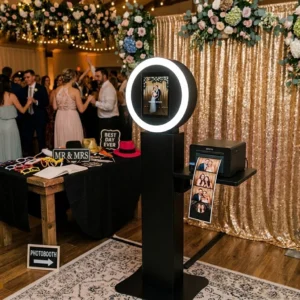
If you’re shopping for a mirror photo booth for sale, you’re already looking at the highest-average-order-value category in the industry – and one of the premium booth types covered in our Ultimate Guide to Professional Photo Booths. A mirror booth isn’t just equipment; it’s a design statement that commands luxury wedding and corporate gala pricing most other booth types can’t touch.
This guide covers exactly what separates a commercial-grade mirror booth from an overpriced novelty item, what the real business numbers look like, and whether buying outright or renting first makes more sense for where you are today.
Why Mirror Booths Command the Highest Prices in the Market
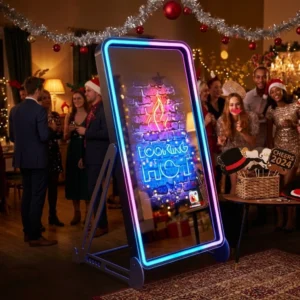
A mirror booth houses a camera, touchscreen, and lighting behind a full-length two-way mirror – typically 55″ to 65″ tall. The moment a guest sees it, they understand they’re getting something different from a tablet on a stand. That perception is exactly why mirror booths dominate the wedding mirror photo booth market and command premium corporate rates most other booth types simply can’t reach.
- Visual impact first – The enclosure itself is the marketing – guests are drawn to it before they even know what it does.
- Perceived exclusivity – Mirror booths are still far less common than iPad setups, which reinforces their premium positioning at luxury weddings and black-tie events.
- Interactive by design – Touchscreen animations, voice prompts, and on-screen games keep guests engaged well beyond the photo itself – increasing dwell time and social sharing.
For rental businesses already running iPad or DSLR setups, adding a mirror booth is typically the fastest way to differentiate from local competitors and unlock a new, higher-paying client tier.
What to Look For When Buying a Mirror Photo Booth
Not every “mirror photo booth for sale” listing represents commercial-grade equipment. Before you buy, evaluate these criteria closely – they determine both your reliability and your resale value down the line.
Enclosure Size & Materials
- Mirror size: 55″– 65″ is the commercial standard – large enough for small groups, still portable enough for a two-person load-in.
- Frame material: Aluminum or steel frames hold up to repeated transport; avoid units with wood-veneer or MDF backing, which warp with humidity and travel.
- Base & wheels: Look for a locking wheel base – this alone saves significant setup time and reduces the risk of tipping at outdoor events.
Touchscreen & Camera Specs
- Touchscreen responsiveness: Capacitive touch (like a smartphone) rather than resistive touch – guests notice the difference immediately.
- Camera quality: DSLR or high-end mirrorless integration outperforms built-in webcams for image sharpness, especially in low light.
- Lighting integration: Ring-light or LED strip lighting built into the frame – not an add-on clamp light – for a seamless guest experience.
💡 Buyer Tip
Ask any mirror booth manufacturer for a live video demo before purchasing, not just product photos. Touchscreen lag and camera focus issues are the two most common complaints from first-time buyers — and neither shows up in a still image.
Building a Mirror Photo Booth Business: The Real Numbers
A mirror photo booth business generates meaningfully higher per-event revenue than tablet-based setups – but it also requires a larger upfront investment and, usually, a full-size SUV or van for transport.
Wedding vs. Corporate Pricing
| Market | Duration | Typical Rate |
|---|---|---|
| Standard Wedding | 3–4 Hours | $900–$1,500 |
| Luxury Wedding | 5+ Hours + Attendant | $1,500–$2,500 |
| Corporate Gala | 4 Hours | $2,000–$4,000 |
| Branded Corporate Activation | 4–6 Hours | $3,000–$5,500+ |
Because mirror booths lean heavily on visual presentation, portfolio photography matters more here than for any other booth type. Operators who invest in one strong venue photoshoot early tend to see it pay off across every proposal they send afterward.
Buy vs. Rent: Which Makes Sense for Your Business?
Before committing to a purchase, it’s worth honestly assessing your booking volume. Here’s how the two paths compare:
- Buy outright – if you’re already booking 3+ events per month across your existing booth types — the equipment pays for itself in one to two quarters, and you keep 100% of the margin on every future booking.
- Rent from a supplier first – if you’re testing whether your local market supports mirror booth pricing before committing capital — this is common for operators expanding from iPad or DSLR setups into their first premium tier.
- Watch your local market – Searches for “mirror photo booth rental near me” and similar near-me terms indicate active local demand – a strong buy signal if you’re seeing consistent inquiries in your area.
🎯 Who Should Buy Now
If you already have a wedding or corporate client base and are simply looking to upsell a premium tier, buying now — rather than testing with a rental — is almost always the better long-term financial decision.
How Much Does a Mirror Photo Booth Cost?
Realistic pricing for a commercial-grade mirror photo booth setup, ready to book events:
- Entry-level mirror booth:$4,500–$7,000
- Mid-tier commercial unit:$7,000–$12,000
- Premium / custom-branded unit:$12,000–$20,000+
- Software subscription:$50–$150/month
- Insurance & transport (van/SUV, if not already owned):Varies widely by market
At an average corporate rate of $3,000 per event, most operators recover a mid-tier unit’s cost within four to five bookings – a faster payback period than most people expect for this category.