Most new operators spend weeks researching software and lighting — then buy the cheapest photo booth enclosure they can find. It’s the single most common and most costly equipment mistake in this business. Before a single photo is taken, the shell you’re carrying tells the room exactly what tier of operator you are. This guide breaks down every photo booth enclosure material on the market, shows you exactly what a cheap shell costs in lost bookings and pricing power, and gives you the buyer’s checklist to make sure you never have to upgrade twice.
In This Guide
- Enclosure Materials — The Four Tiers
- 5 Ways a Cheap Shell Costs You Real Money
- What to Look For in a Commercial-Grade Enclosure
- Design Features That Signal Quality
- Is Upgrading Worth It? The ROI Math
The Most Expensive Mistake New Operators Make
Buying a cheap enclosure to “test the concept” — then discovering 6 months in that the enclosure is the reason you can’t raise rates or win venue referrals. Upgrading means buying twice. This guide exists to help you buy once, correctly.
What Photo Booth Enclosures Are Actually Made Of
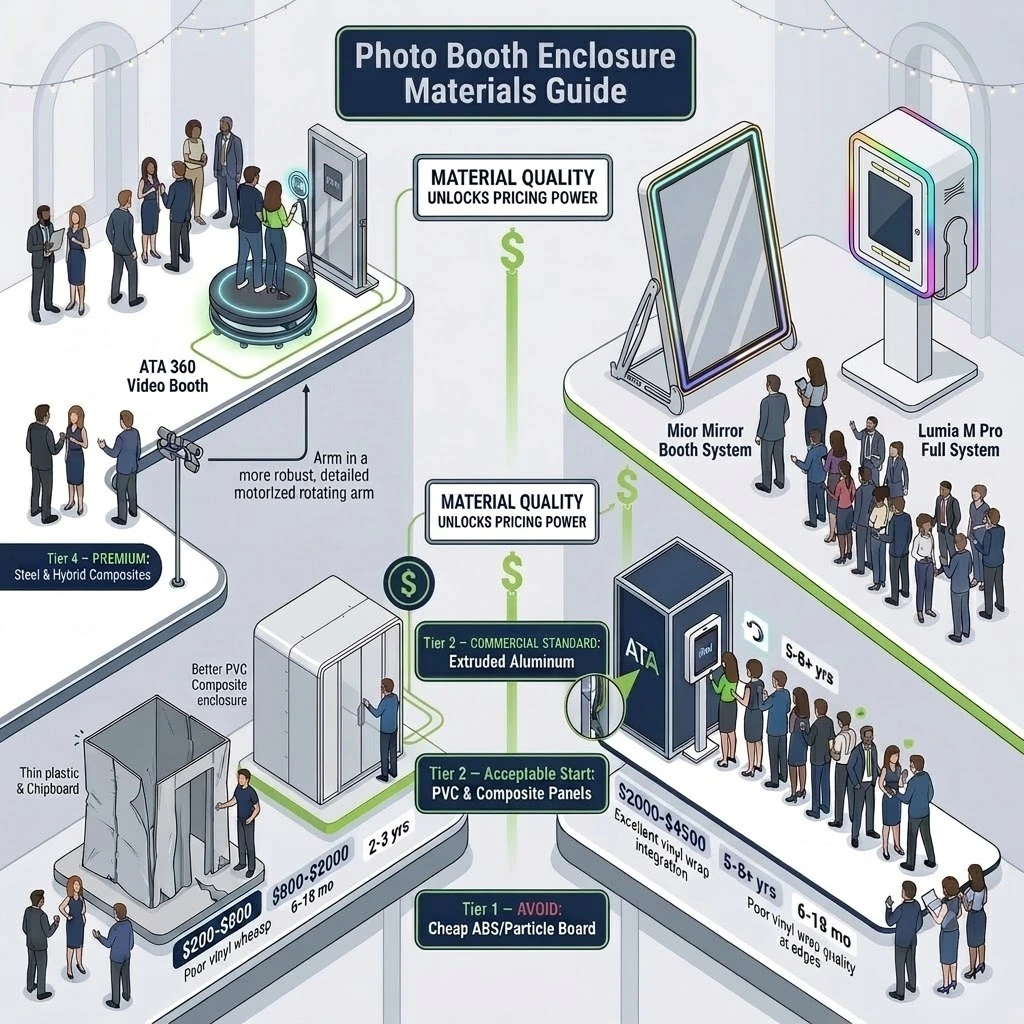
The photo booth enclosure materials market breaks into four tiers. Each has a distinct build philosophy, performance profile, and target buyer.
Cheap ABS Plastic & Particle Board
Budget enclosures built from thin ABS plastic panels or MDF/particle board frames. Designed to hit a low price point — not to survive commercial event use. ABS plastic flexes visibly under load, warps in heat, and develops stress fractures after repeated assembly cycles. Particle board is heavier than aluminum while being structurally weaker, and swells, chips, and degrades when it encounters moisture. Typical commercial lifespan: 6–18 months before visible wear makes them unpresentable.
High-Density PVC & Composite Panels
High-density PVC foam board and engineered composite panels are lighter than particle board, resist moisture better, and hold their shape across a wider temperature range. Well-designed PVC enclosures can look professional at a distance and hold up for 2–3 years of moderate commercial use. Surface joins are rarely as tight as metal-framed alternatives, and vinyl wraps don’t adhere as cleanly. A defensible starting point on a tight launch budget — with the understanding that an upgrade is likely in year two.
Extruded Aluminum Frames
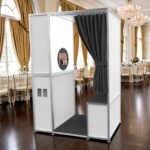
Extruded aluminum is the material that defines what a commercial photo booth shell actually means. Aluminum profiles formed through the extrusion process offer the best strength-to-weight ratio of any structural material — which is why they’re used in professional AV equipment, exhibition displays, and broadcast gear. An aluminum enclosure that costs $2,500 today should be operating at full professional quality in five to seven years with normal maintenance. The surface accepts vinyl wraps cleanly, joints are tight and flush, and it looks as intentional up close as it does across a ballroom.
Steel & Hybrid Engineered Composites
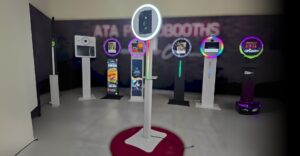
Steel-framed and hybrid composite enclosures sit at the premium end — heavier than aluminum, but structurally superior for installations that take significant mechanical stress (360 platforms, mirror booths, high-traffic permanent installs). Powder-coated steel eliminates surface degradation concerns entirely. These materials are overkill for a standard iPad open-air enclosure but genuinely the right spec for a 360 platform or mirror booth taking 500+ activations per year.
Material Comparison at a Glance
| Criterion | ABS / Board | PVC Composite | Aluminum | Steel / Premium |
| Structural Rigidity | Poor | Fair | Excellent | Superior |
| Commercial Lifespan | 6–18 mo | 2–3 yrs | 5–8+ yrs | 10+ yrs |
| Vinyl Wrap Quality | Poor | Fair | Excellent | Superior |
| Client Impression | Budget | Mid-market | Premium | Luxury |
| Pricing Power Unlocked | $400–$700 | $700–$1,100 | $1,100–$2,000 | $2,000–$5,000+ |
The 5 Ways a Cheap Shell Costs You Real Money
The impact of a budget enclosure shows up in your booking rate, your average event rate, and your ability to access the highest-value client segments in your market.
You Can’t Raise Your Rates
Pricing power is visual before it’s anything else. Budget plastic shells photograph as budget plastic shells — and clients anchor their price expectations accordingly. Operators running commercial-grade aluminum enclosures routinely charge 60–90% more for the same software, same iPad, same lighting — because the enclosure signals a different tier of service.
Estimated lost revenue: $200–$500 per booking on rates alone
Venues Won’t Refer You
Venue coordinators who refer vendors are putting their professional reputation on the line. They refer operators whose equipment looks as good as the venue does. Operators who end up on preferred vendor lists almost universally run commercial-grade equipment that photographs well in venue marketing materials.
Estimated lost revenue: 4–8 referral bookings per year per venue relationship
Corporate Clients Won’t Hire You
Corporate event buyers evaluate photo booth operators the same way they evaluate any brand partner — through the quality of physical presentation. Corporate budgets for photo booth activations run $2,500–$6,000+; those rates are paid for a premium, brand-appropriate experience. Budget enclosures disqualify operators from this market segment entirely.
Estimated lost revenue: $1,500–$4,000 per corporate booking missed
Replacement Costs Erase Your Savings
A $500 ABS plastic enclosure that lasts 12–18 months costs more over three years than a $2,800 aluminum enclosure that lasts seven. The math on commercial-grade enclosures almost always favors buying right once over buying cheap twice.
True cost over 3 years: 2–3x the original purchase price in replacement
Reliability Failures at Live Events
Budget enclosures introduce structural failure risks: panels that flex during printing (causing misalignment), mounting points that crack under DSLR weight, cable routing gaps that create tripping hazards, and stability issues on uneven flooring. A single event where your booth fails visibly can result in a refund request, a negative review, and a lost venue relationship worth thousands in future referrals.
Single event failure: full refund + venue relationship + future referrals
What to Look For in a Commercial-Grade Photo Booth Enclosure
Not every product marketed as “commercial” actually is. Ask any vendor these questions before purchasing:
- Is the structural frame extruded aluminum (not just aluminum finish)?
The framing material carries load and determines longevity — the surface finish is cosmetic. - Is the finish powder-coated or anodized (not painted)?
Paint chips and scratches. Powder coating is baked on and resists impact, abrasion, and UV degradation. - Are panel gaps under 2mm?
Gaps over 3mm indicate loose manufacturing tolerances. Run your fingers along the seams — they should feel nearly seamless. - Are cables routed internally?
Exposed cables are a liability and a professional red flag. Internal routing keeps the exterior clean and eliminates tripping hazards. - Can it be assembled solo in under 30 minutes?
If a vendor can’t confirm this, the design hasn’t been optimized for operational reality. - Is vinyl wrap compatibility confirmed by the vendor?
Ask directly. The answer tells you whether the manufacturer has thought through real commercial use. - Is the mounting system rated for your hardware weight?
Get the rated weight capacity and compare it to your actual hardware load.
The Venue Walk-In Test
Before purchasing any enclosure, ask yourself: “If I walked into a $300/head wedding venue with this — would I be proud of how it looks?” If the honest answer is uncomfortable, the enclosure is costing you that market segment.
Design Features That Separate Pro Enclosures from Budget Ones
These details reveal whether a manufacturer has actually deployed booths at real events — or just designed something that looks good in a product photo.
- Panel Gap Tolerance
- Pro: <2mm flush joins, no visible light gap
- Budget: 3–8mm gaps, visible misalignment
- Cable Management System
- Pro: Internal routing channels, strain relief
- Budget: External cable ties, exposed runs
- Assembly System
- Pro: Tool-free locking connectors, <25 min solo setup
- Budget: Screws, bolts — requires tools and time
- Vinyl Wrap Surface
- Pro: Flat, rigid, anodized — perfect wrap adhesion
- Budget: Textured or flexible — wrap lifts at edges
- Weight Distribution & Stability
- Pro: Low center of gravity, weighted base
- Budget: Top-heavy, narrow base — tips in contact
- Printer Integration
- Pro: Dedicated printer bay, vibration isolation
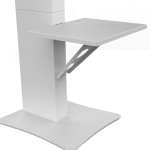
- Budget: External printer, exposed or cable-tied
Is Upgrading Worth It? The ROI Math
The honest answer: yes — if you’re operating in markets where the visual upgrade translates to rate increases and better bookings. Here’s the math over 36 months.
❌ Budget Enclosure (36 months)
✅ Commercial Aluminum (36 months)
| Enclosure cost | $600 |
| Replacement at 18 months | $600 |
| Avg booking rate | $650/event |
| Events/month | 5 |
| 36-month gross revenue | $117,000 |
| Total enclosure spend | $1,200 |
| Enclosure cost (one-time) | $2,800 |
| Replacement at 18 months | $0 |
| Avg booking rate (premium) | $1,050/event |
| Events/month | 7 |
| 36-month gross revenue | $264,600 |
| Total enclosure spend | $2,800 |
The 36-Month Difference
The commercial enclosure costs $2,200 more upfront and generates $146,000 more revenue over 36 months. The ROI on the upgrade is over 6,000%.
Pre-Purchase Enclosure Checklist
[ ] Frame material confirmed as extruded aluminum, steel, or premium composite — not ABS or particle board
[ ] Surface finish is powder-coated or anodized — not painted
[ ] Panel gaps under 2mm confirmed — request close-up photos of seams if buying online
[ ] Integrated cable management channels included — not surface-mounted clips
[ ] Solo assembly time under 30 minutes confirmed by vendor
[ ] Vinyl wrap compatibility confirmed — flat surfaces, no texture
[ ] Mounting system rated for your hardware weight
[ ] Printer bay integrated or dedicated printer shelf included
[ ] Fits in your transport vehicle with all components packed
[ ] Vendor offers post-sale support and replacement parts availability
[ ] “If I walked into a premium venue with this — would I be proud of how it looks?”